
Website Design
GEO / SEO
Ads
Website Design
GEO / SEO
Ads
Home - Web Design & Development - Page 9
June 9, 2026
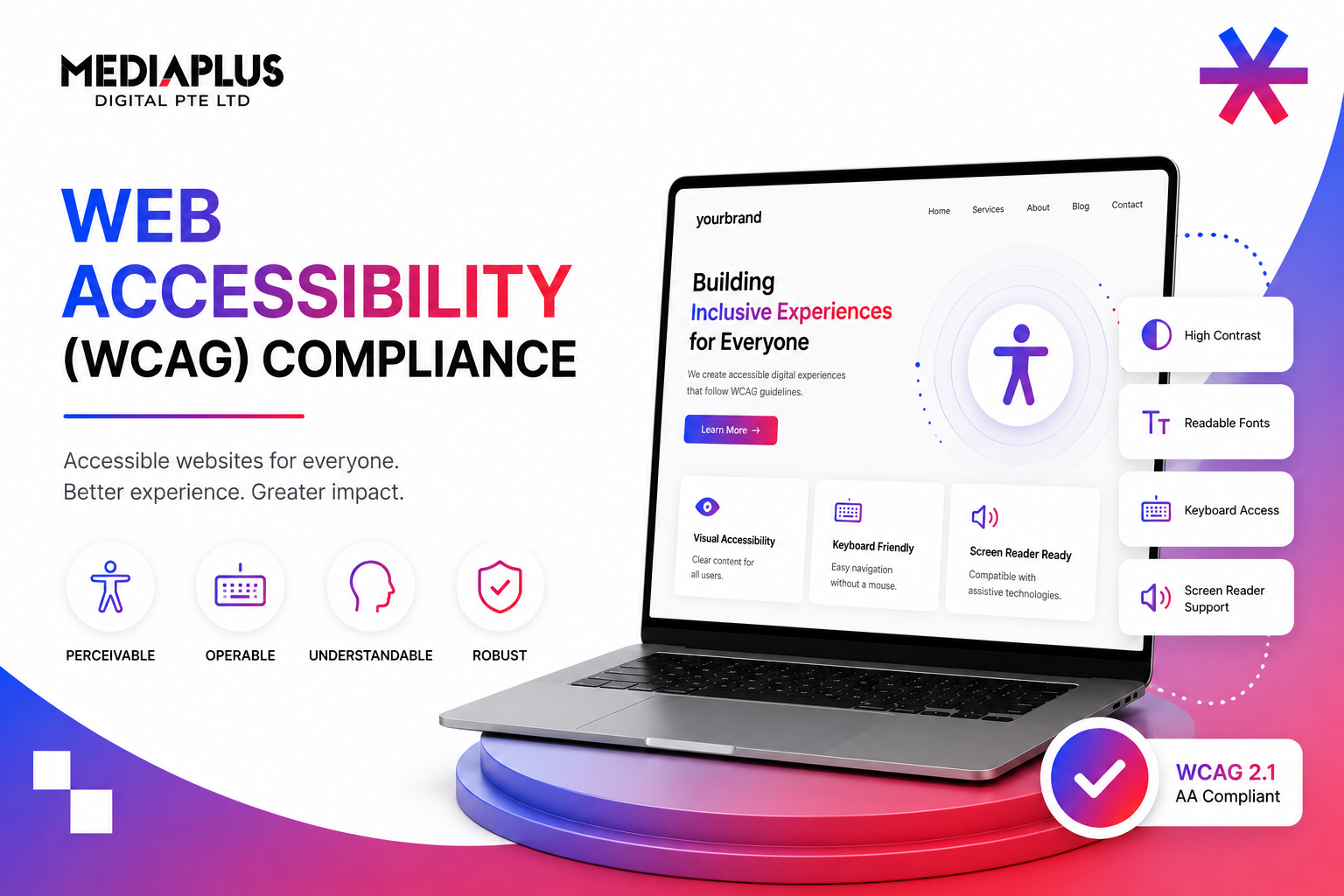
Around one in five Singapore residents experiences digital interfaces differently from the average user, including the visually impaired, hearing impaired, motor-impaired, and people with cognitive or learning differences. Web accessibility is the practice of building sites that work for all of them. In 2026, accessibility in Singapore sits in an unusual place: not yet legally […]
Read MoreJuly 13, 2026
Walk through any sample of Singapore B2B websites and you will spot the same problem within thirty seconds: the site looks like a B2C store with the prices removed. The hero says “Welcome to ACME Solutions”. The CTA says “Contact us”. The homepage tries to sell five products to fifteen industries in one scroll. The […]
Read More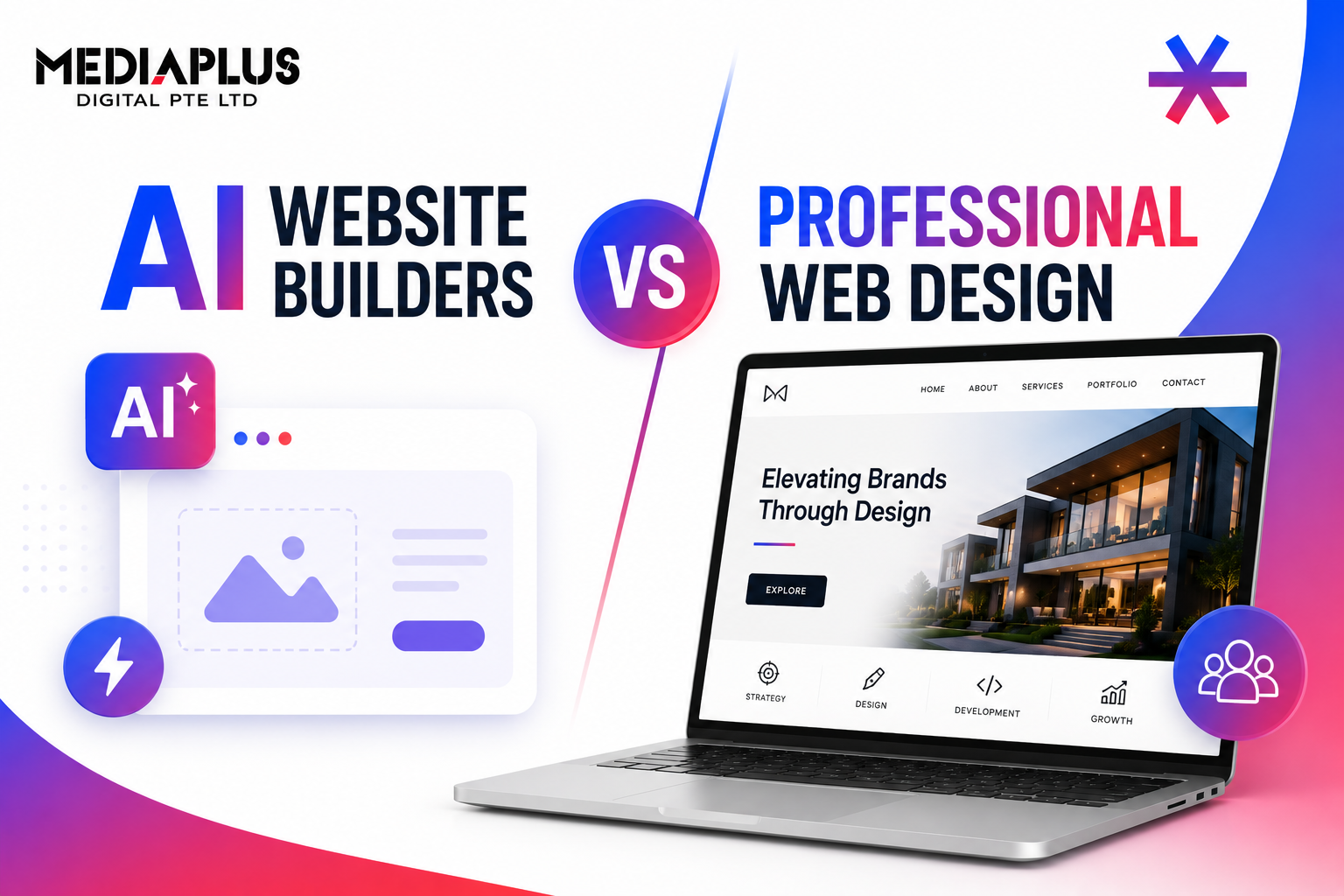
September 23, 2026
There is no universal answer to “AI builder or designer”. Anyone who tells you there is either has a builder to sell you or a design retainer to fill. The honest answer depends on what kind of business you run, how much your time is worth, and how serious you are about ranking on Google […]
Read More
June 9, 2026
If you run an online store in 2026, the question is no longer “should we add a chatbot”. It is “which one will actually pay for itself this quarter”. The good ones now resolve up to 81% of incoming queries without a human (eesel AI benchmark), nudge shoppers from “browsing” to “buying” with personalised product […]
Read More
September 23, 2026
In a Singapore studio in 2026, the path from “we want a website” to “the site is live” looks completely different from how it did even two years ago. A founder describes their business in a paragraph. Forty minutes later, an AI returns a sitemap, twelve wireframes, draft copy for every section, and three brand-direction […]
Read More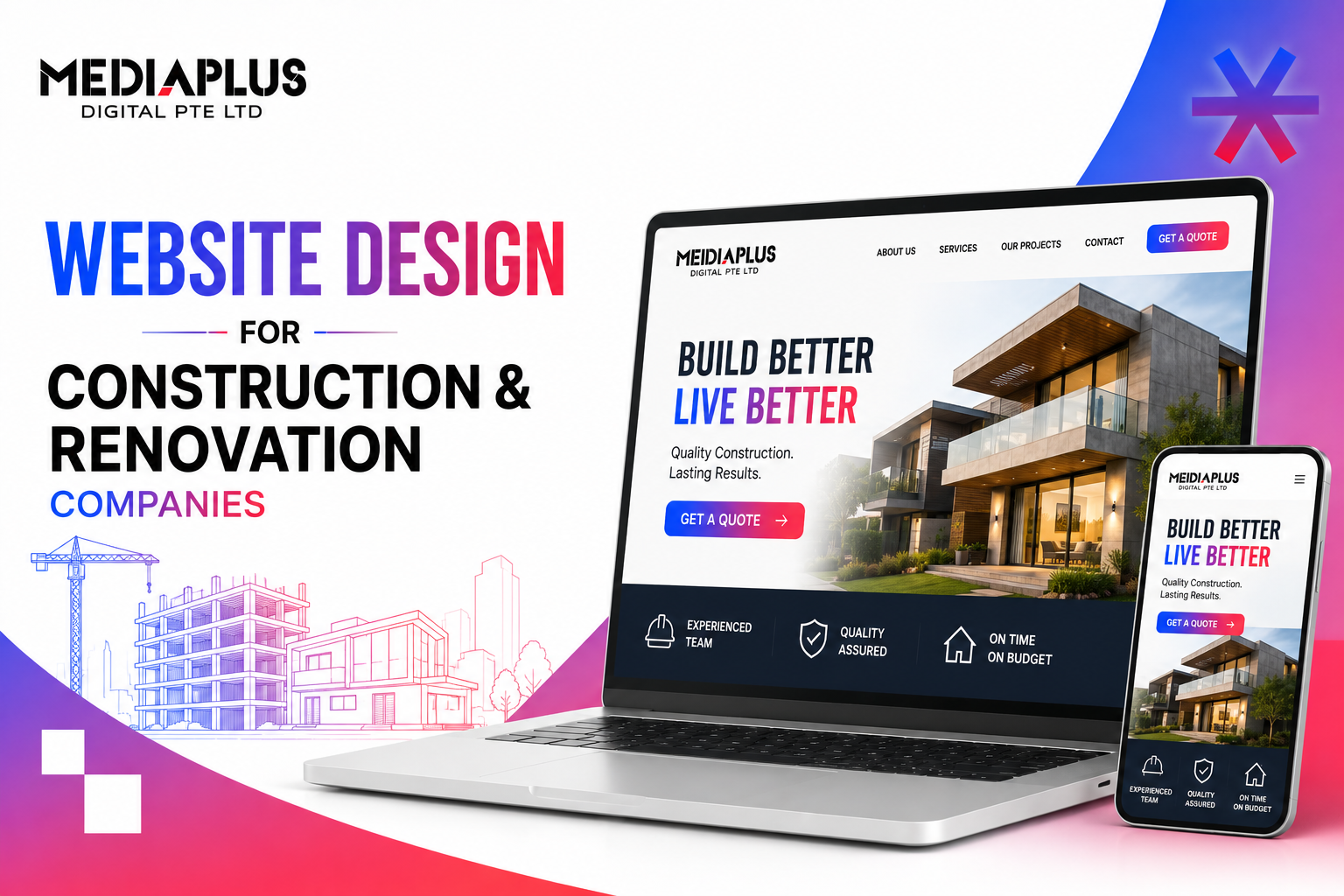
July 20, 2026
A great construction or renovation website in Singapore is portfolio-led, video-driven, and built around fast quote capture. It showcases high-resolution before/after photos by project type (HDB, condo, commercial), embeds walkthrough videos, has a multi-step quote form that captures budget and scope, displays verified testimonials and BCA / industry certifications, and is supported by Qanvast, Renopedia, […]
Read More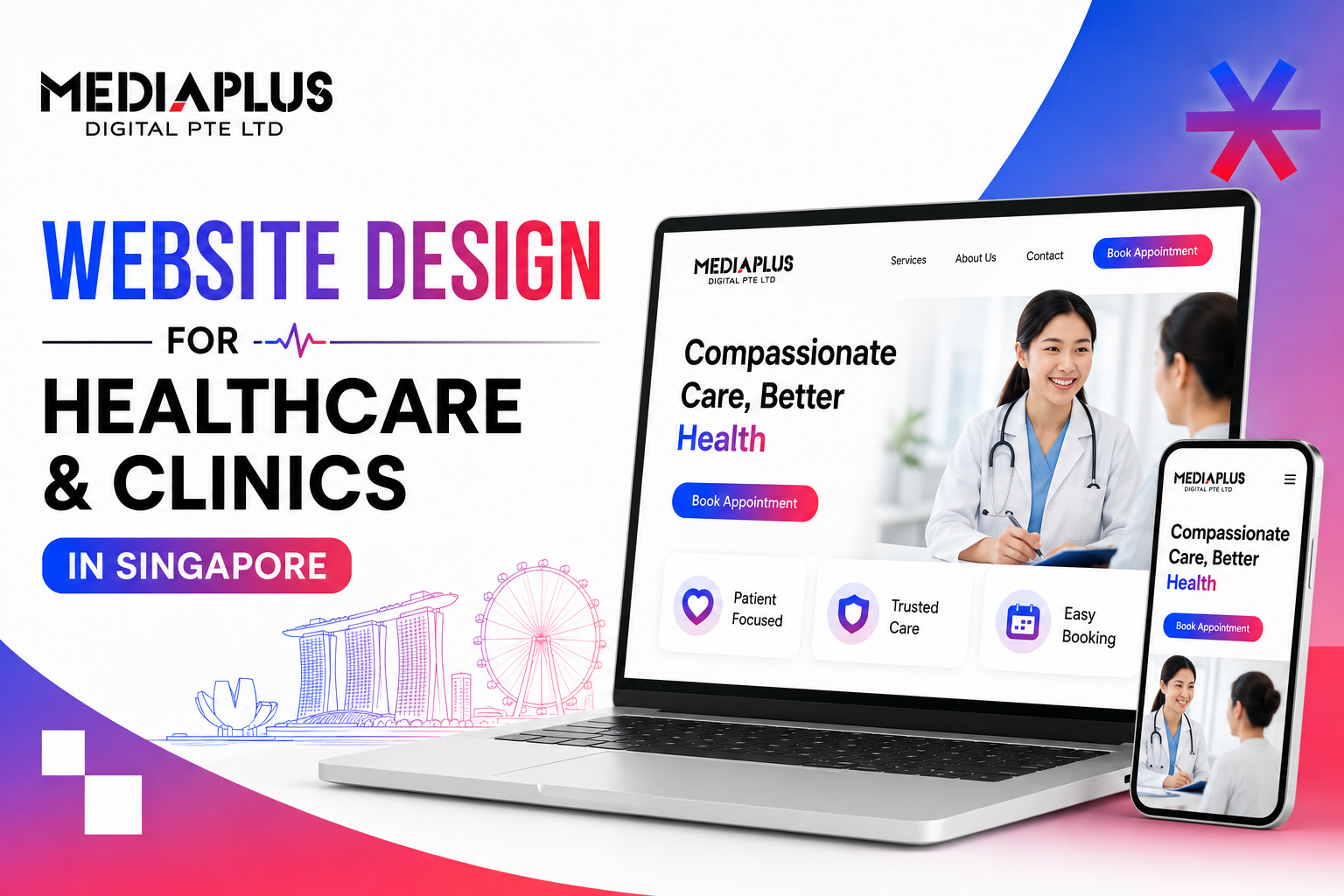
July 20, 2026
A clinic website in Singapore must comply with MOH advertising rules, the Personal Data Protection Act (PDPA), and the Healthcare Services Act 2020 (HCSA). It needs verified doctor profiles, secure (SSL) appointment booking that completes in under three taps, mobile-first design (60%+ of healthcare searches happen on mobile), service and treatment pages optimised for SEO, […]
Read More
July 20, 2026
A great F&B website in Singapore is mobile-first, menu-first, and ordering-first. It loads in under 2.5 seconds, surfaces a clear hero photo with a “Reserve” or “Order” CTA, displays an HTML (not PDF) menu that Google can index, integrates direct online ordering with PayNow and GrabPay, embeds a reservation widget such as Chope or Oddle, […]
Read More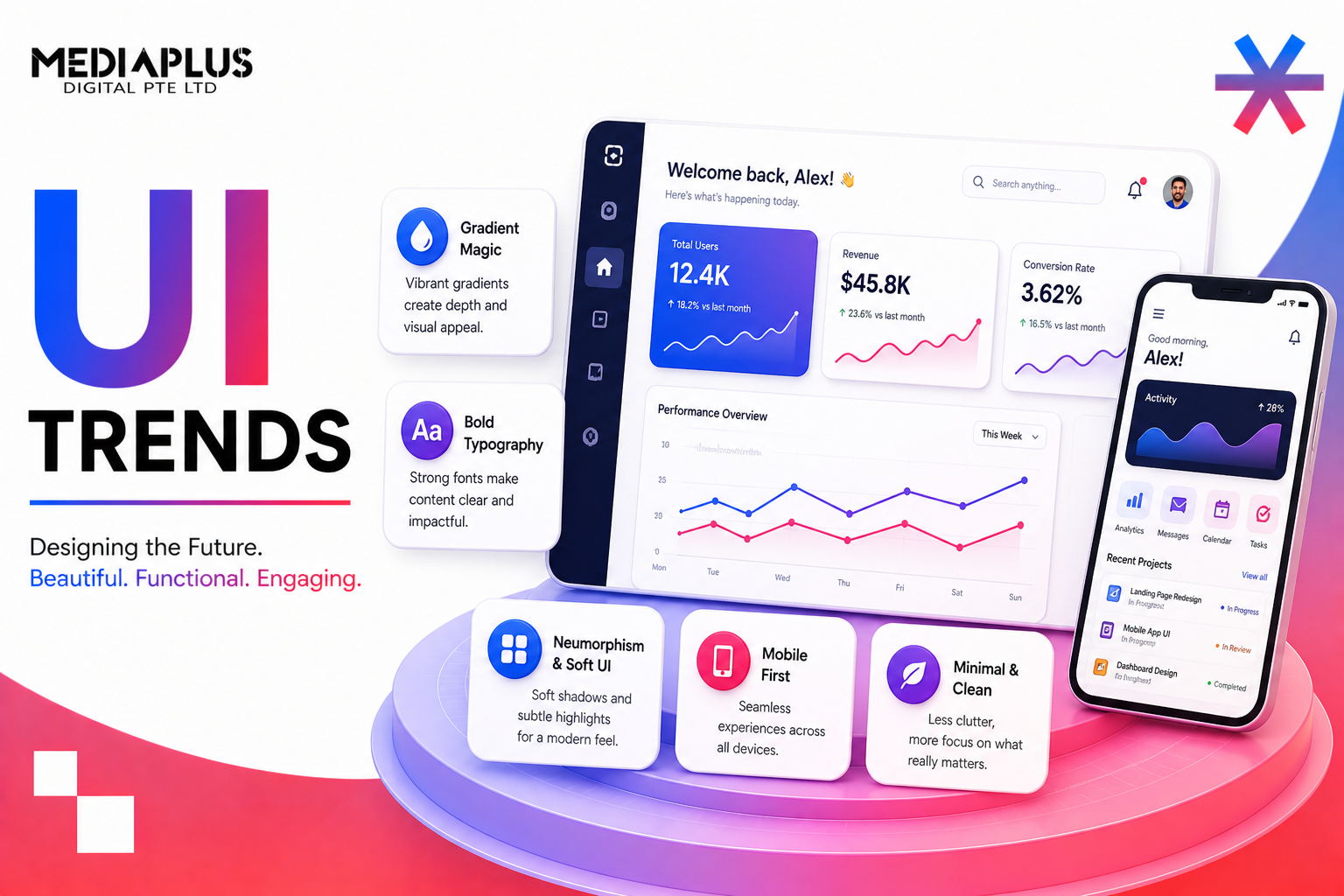
July 20, 2026
The leading UI trends in 2026 are AI copilot interfaces, bento grid layouts, responsible glassmorphism, dark mode as a default, micro-interactions, 3D and spatial design, AI-driven personalisation, voice and zero UI, bold and fluid typography, accessibility-first design, dopamine colour palettes, and gesture-based mobile navigation. Together, these patterns reflect a shift from purely visual styling to […]
Read More