
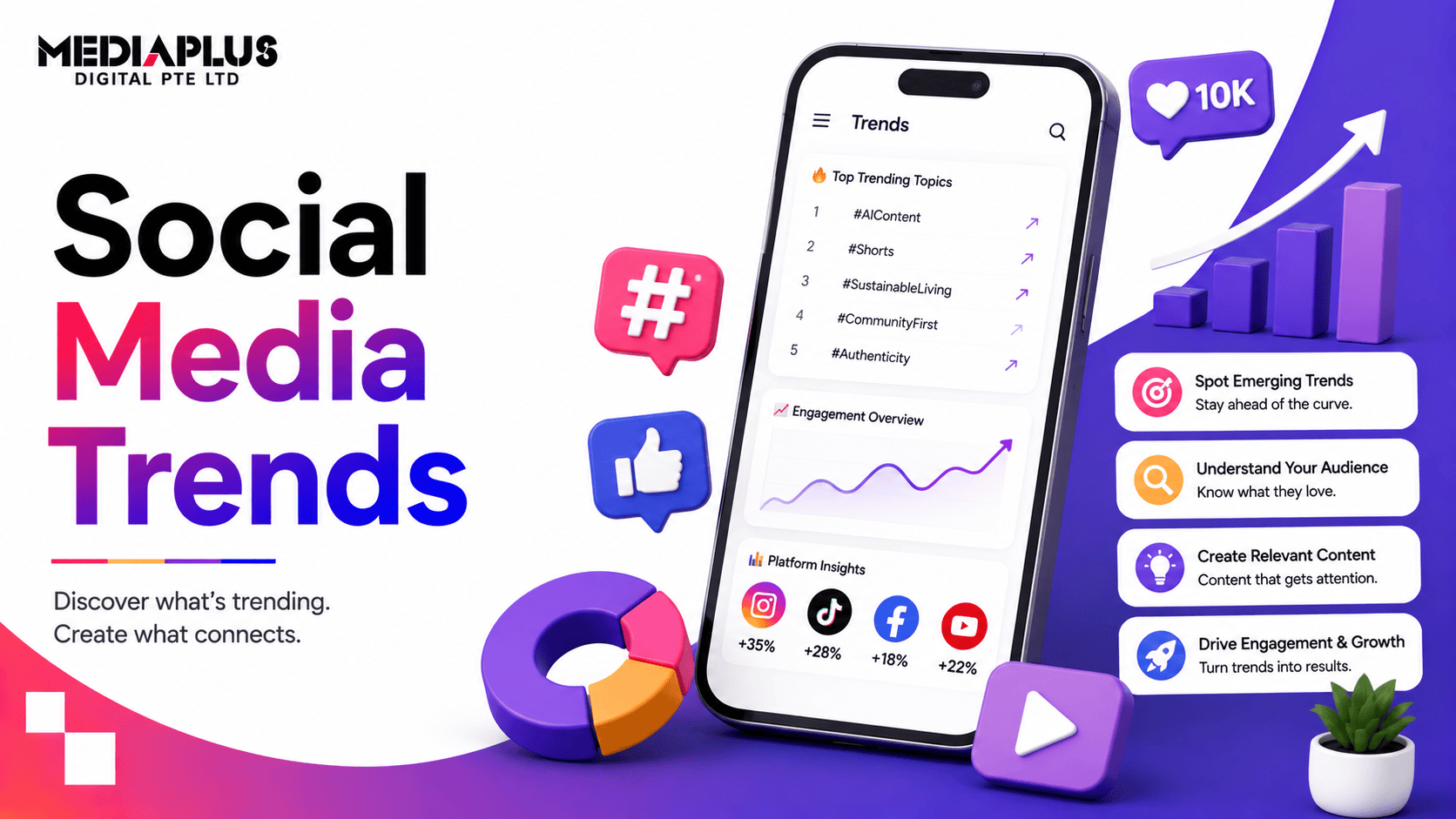
Social media in Singapore moves fast. Platforms that mattered two years ago have been reshaped by short video, AI, and social commerce, and the brands winning attention in 2026 are the ones that adapted. This guide breaks down the social media trends shaping Singapore this year and, more importantly, what each one means for how you should market.
Quick answer: The biggest social media trends in Singapore for 2026 are short-form video dominance (TikTok and Reels), social commerce and shopping in-app (TikTok Shop, Instagram/Facebook Shopping), the rise of AI in content and search, authentic and creator-led content over polished ads, Xiaohongshu’s growth among Chinese-speaking users, and messaging platforms like WhatsApp and Telegram as marketing channels. Brands that lead with video, authenticity, and easy in-app buying win.
1. Short-form video is the default
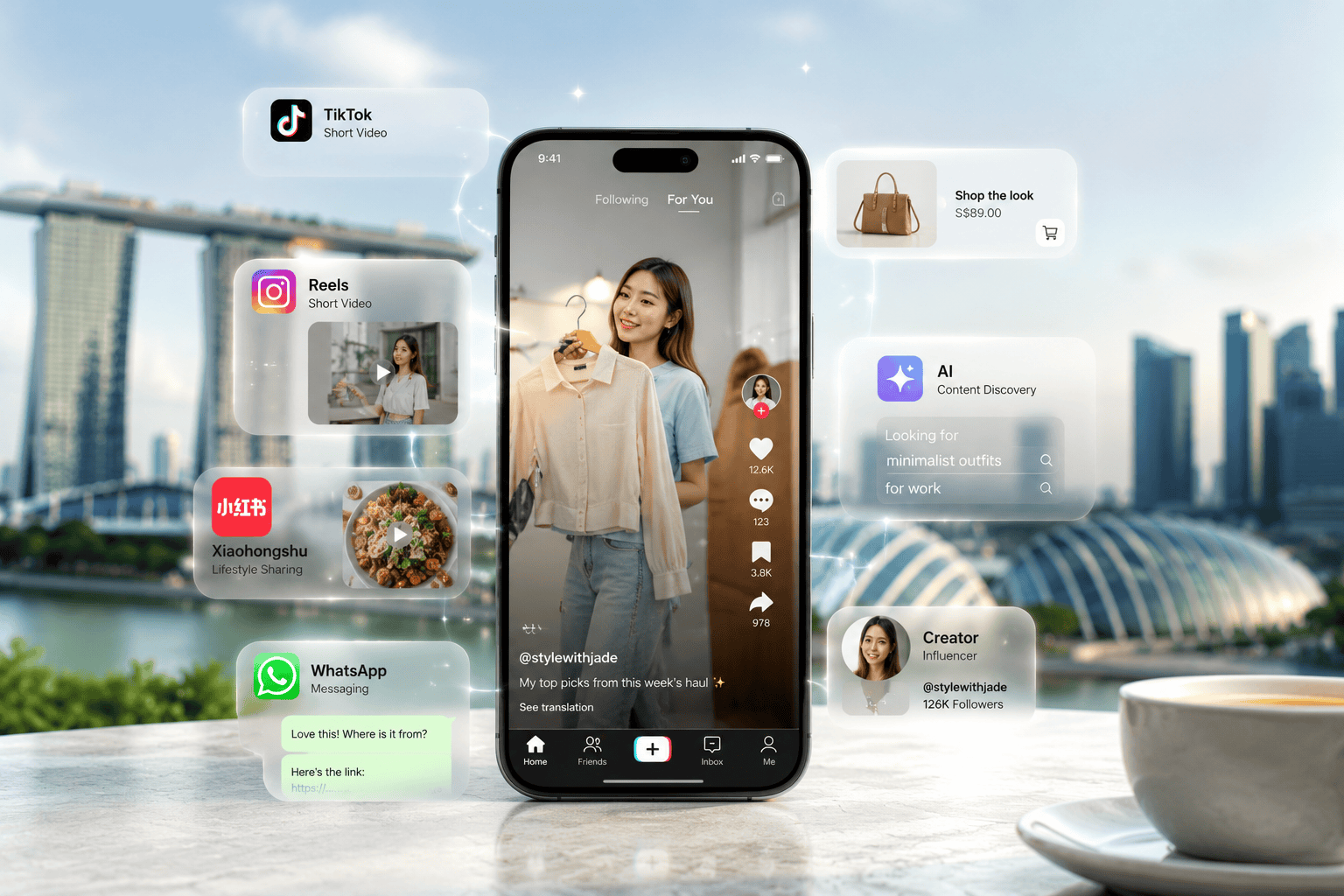
Short vertical video (TikTok, Instagram Reels, YouTube Shorts) is now the primary way people discover and engage with content in Singapore. Reach, algorithmic favour, and attention all skew heavily to short video, and static posts alone no longer cut through.
What it means for you: make short-form video your core content format, not an add-on. Prioritise hooks in the first seconds, native vertical formats, and trending sounds. If you produce one type of content well, make it short video.
2. Social commerce goes mainstream
Buying without leaving the app has become normal. TikTok Shop, Instagram and Facebook Shopping, and live-selling let Singaporeans discover and purchase in a single flow, collapsing the old gap between content and checkout.
What it means for you: if you sell products, set up in-app shopping and tie content directly to purchase. Shoppable video, live selling, and product tags shorten the path from craving to cart. See our ecommerce web development services.
3. AI reshapes content and discovery
AI is now woven into both sides of social: brands use it to produce and personalise content faster, and users increasingly search and get recommendations through AI. Platforms are embedding AI in creation tools, search, and feeds.
What it means for you: use AI to speed up ideation, editing, and personalisation, but keep a human, on-brand voice. And remember that discovery is shifting toward AI answers, which is why GEO and AI search visibility now matter alongside social.
4. Authenticity beats polish
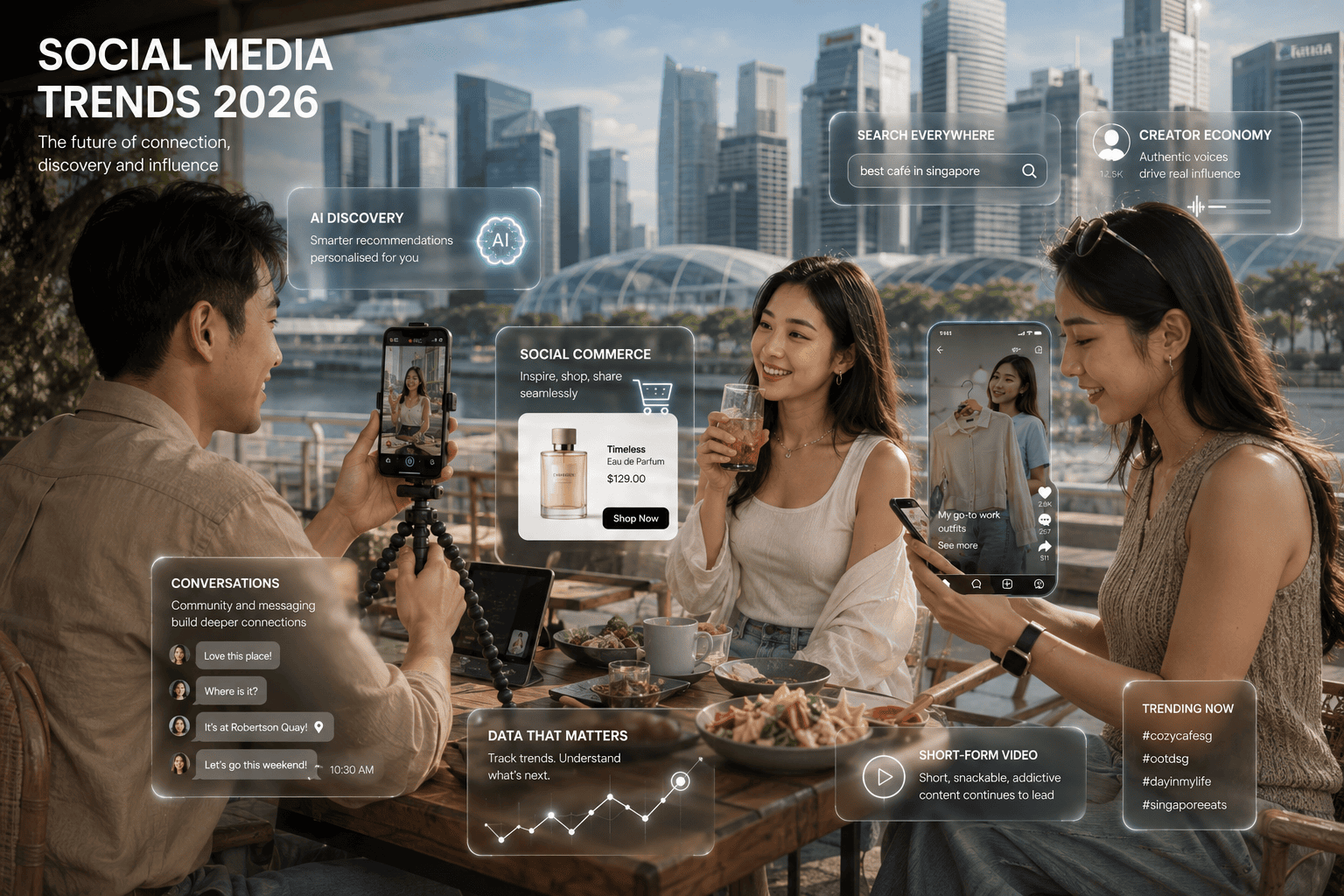
Audiences in Singapore increasingly favour genuine, relatable, creator-style content over glossy corporate ads. Behind-the-scenes, real people, unscripted moments, and honest reviews build more trust than high-gloss production.
What it means for you: loosen up. Show the people and process behind your brand, lean on user-generated content, and let creators speak in their own voice. See our guide to user-generated content.
5. Creator and influencer marketing matures
Influencer marketing has shifted from a handful of big names to a spread of micro and nano creators with engaged, niche audiences, often a better fit for Singapore’s tight, community-driven market.
What it means for you: work with smaller, relevant creators whose audiences trust them, not just the biggest follower counts. Authentic creator content often outperforms brand-produced ads on trust and conversion.
6. Xiaohongshu (RED) keeps rising
Xiaohongshu continues to grow among Chinese-speaking Singaporeans as a discovery and review platform, especially for F&B, beauty, travel, and lifestyle. It blends social, search, and reviews in one place.
What it means for you: if your audience includes Chinese-speaking Singaporeans, RED is worth a dedicated presence. See what Xiaohongshu is.
7. Messaging becomes a marketing channel
Conversations, not just feeds, drive results. WhatsApp and Telegram are widely used in Singapore for customer service, broadcasts, and direct selling, turning private messaging into a genuine marketing and conversion channel.
What it means for you: build messaging into your funnel, with WhatsApp Business for enquiries, bookings, and broadcasts. It is where many Singaporeans prefer to talk to businesses.
8. Social search grows
More Singaporeans, especially younger users, search directly on TikTok and Instagram for recommendations (where to eat, what to buy, how to do something) instead of, or alongside, Google.
What it means for you: optimise your social content to be found: clear captions, keywords, on-screen text, and consistent topics, so your posts surface when people search in-app.
9. Community over reach
As organic reach tightens, brands are shifting from chasing views to building engaged communities: groups, close friends, loyal followers, and repeat engagement that compounds over time.
What it means for you: invest in genuine engagement, reply, involve your audience, build community, rather than only chasing one-off viral reach. Loyal communities deliver steadier returns.
Trend summary
|
Trend |
What to do |
|
Short-form video dominates |
Make video your core format |
|
Social commerce |
Enable in-app shopping and shoppable content |
|
AI in content and search |
Use AI to scale, keep it human; think AI search |
|
Authenticity |
Show real people, use UGC |
|
Micro-creators |
Partner with relevant, engaged creators |
|
Xiaohongshu growth |
Add RED for Chinese-speaking audiences |
|
Messaging channels |
Use WhatsApp/Telegram in the funnel |
|
Social search |
Optimise captions and text to be found |
|
Community |
Build engagement, not just reach |
Frequently asked questions
What is the biggest social media trend in Singapore in 2026?
Short-form video. TikTok, Instagram Reels, and YouTube Shorts dominate discovery and engagement, and short vertical video should be the core of most brands’ content.
Is social commerce worth it in Singapore?
Yes, if you sell products. In-app shopping through TikTok Shop and Instagram/Facebook Shopping, plus live selling, shortens the path from content to purchase and is now mainstream.
Should Singapore brands be on Xiaohongshu?
If your audience includes Chinese-speaking Singaporeans, yes. RED is a growing discovery and review platform, particularly strong for F&B, beauty, and lifestyle.
How is AI changing social media marketing?
AI speeds up content creation and personalisation, and increasingly powers how people search and get recommendations. Use it to scale while keeping a human voice, and pay attention to AI-driven discovery.
Do I still need big influencers?
Not necessarily. Micro and nano creators with engaged, relevant audiences often deliver better trust and conversion in Singapore’s tight market than large accounts.
Stay ahead of the trends
Social media in Singapore rewards brands that adapt early. If you want a social strategy built for how Singaporeans actually discover and buy in 2026, talk to MediaPlus Digital. Explore our social media marketing and digital marketing services, and see the wider digital marketing trends in Singapore.




