Backlinks are one of the strongest signals Google uses to decide which pages to trust and rank. If you have read anything about SEO, you have seen the word, but the detail is where results live: not all backlinks help, and some can hurt. This guide explains what backlinks are, why they matter, the types that exist, how search engines judge them, and how to earn good ones safely.
Quick answer: A backlink is a link from one website to another. When another site links to your page, it passes a signal of trust that can lift your rankings, bring referral traffic, and help search engines discover your content. What counts is quality, not quantity: a few links from relevant, authoritative sites beat hundreds of low-value ones, and spammy links can do real damage.
What are backlinks?
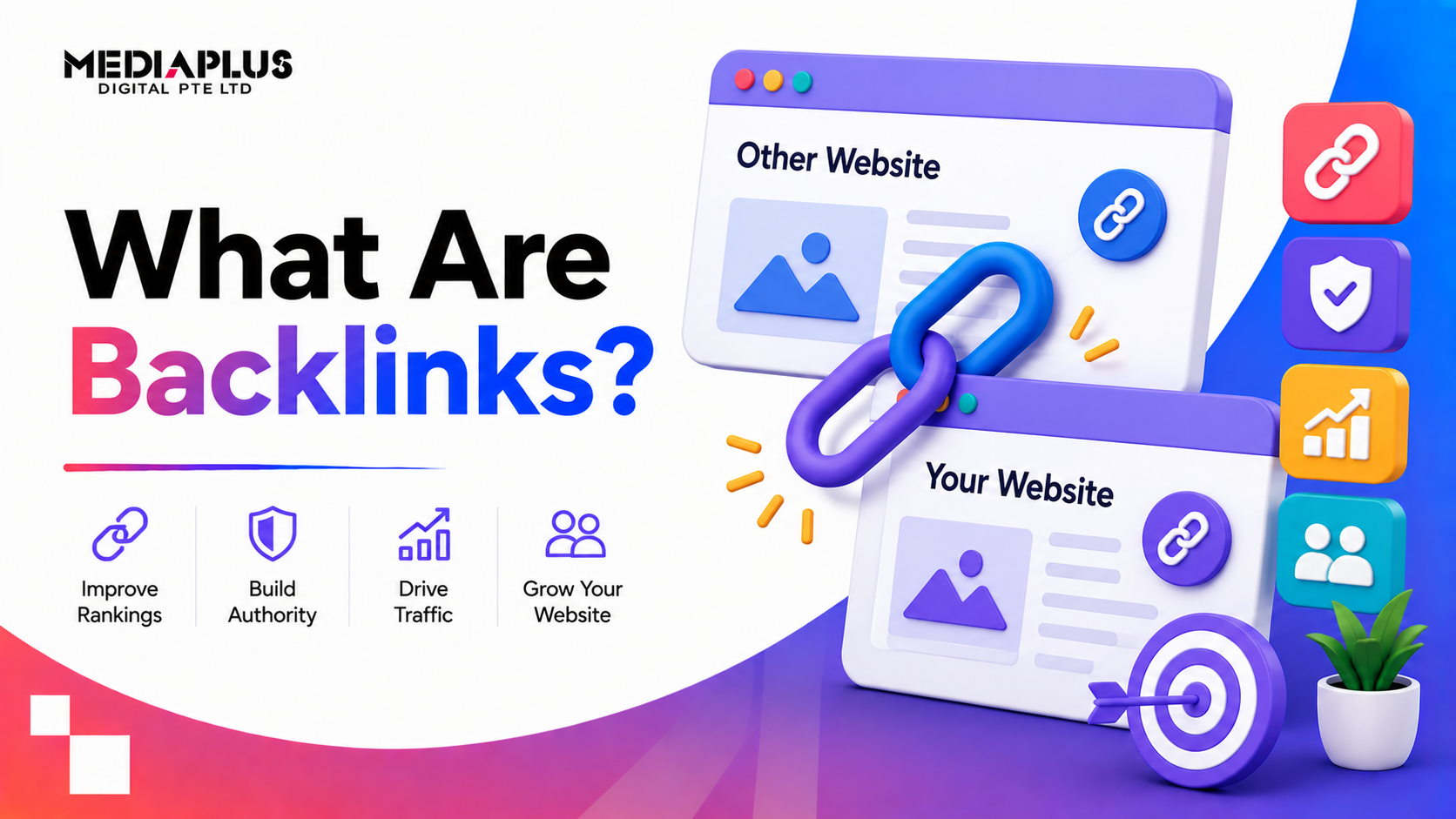
A backlink (also called an inbound link) is simply a link on another website that points to a page on yours. If a Singapore business blog writes an article and links to your service page, that link is a backlink for you.
Search engines treat backlinks a bit like recommendations. Each link from a credible, relevant site is a vote that your page is useful. The more genuine, high-quality votes a page earns, the more authority it tends to build, and the better it can rank. This is a core part of off-page SEO, the work that happens away from your own website.

Backlinks vs internal and external links
These three terms get mixed up, so here is the difference from your site’s point of view:
|
Link type |
Where it points |
Whose site it sits on |
|
Backlink (inbound) |
From another site to your site |
Someone else’s site |
|
Internal link |
From one of your pages to another of your pages |
Your site |
|
External (outbound) link |
From your site to another site |
Your site |
Backlinks are the ones you cannot fully control, which is exactly why search engines value them. For how internal and external links fit in, see on-page vs off-page SEO.
Why backlinks matter for SEO
Backlinks do four jobs at once:
- Authority. Links from trusted sites pass credibility to your pages, which helps them compete for harder keywords.
- Rankings. Backlinks remain one of Google’s most important ranking factors, alongside content and technical health.
- Referral traffic. A link on a relevant, well-read site sends real visitors, not just SEO value.
- Discovery. Search engines follow links to find and crawl new pages, so backlinks help your content get indexed.
In short, backlinks are how a page earns the authority to rank for competitive terms. They work best on top of solid on-page and technical SEO.
Types of backlinks
Not every backlink carries the same weight. The common types:
|
Type |
What it is |
SEO value |
|
Editorial |
A site links to you naturally because your content is useful |
Highest |
|
Guest post |
A link in an article you contribute to another site |
Moderate, if the site is relevant and reputable |
|
Dofollow |
A standard link that passes authority |
Passes ranking value |
|
Nofollow |
A link tagged so it does not pass authority |
Little direct value, still useful for traffic and a natural profile |
|
Sponsored |
A paid or partnership link (should be tagged sponsored) |
No ranking value by design |
|
UGC |
User-generated links (comments, forums, profiles) |
Low, often nofollow |
Dofollow vs nofollow
This is the distinction people ask about most.
- Dofollow is the default. It tells search engines to follow the link and pass authority (“link equity”) to the destination. These are the links that move rankings.
- Nofollow (and the newer sponsored and ugc tags) tells search engines not to pass authority. Google treats these as hints. Nofollow links still bring referral traffic, brand exposure, and, importantly, a natural-looking profile.
A healthy backlink profile has a mix. If every link you have is dofollow with an exact-match keyword, it looks manipulated. Real websites accumulate a blend of dofollow, nofollow, branded, and naked-URL links over time.
How search engines judge backlink quality
Google does not just count links, it weighs them. The main factors:
- Authority of the linking site. A link from an established, trusted domain is worth far more than one from an unknown or spammy site.
- Topical relevance. A link from a site in your industry counts for more than one from an unrelated niche.
- Placement. A link inside the main content beats one buried in a footer, sidebar, or author bio.
- Anchor text. The clickable words give context, but over-optimised, repetitive exact-match anchors look manipulative.
- Follow status. Dofollow passes authority; nofollow mostly does not.
- Link velocity. The pace at which links arrive. Steady, natural growth is healthy; a sudden spike of hundreds of links can look like a paid or spam campaign.
Quantity vs quality
More links is not the goal. Ten editorial links from relevant, authoritative Singapore and industry sites will outperform a thousand links from directories and comment spam. Google has spent years devaluing low-quality links, so chasing volume is both wasteful and risky. Aim for fewer, better links that a real editor chose to give you.
Good backlinks vs bad backlinks
|
Good backlinks |
Bad backlinks |
|
From relevant, authoritative sites |
From spammy, irrelevant, or low-quality sites |
|
Editorially placed in real content |
From link farms or bulk “packages” |
|
Natural, varied anchor text |
Repetitive exact-match anchor text |
|
Earned because the content deserves it |
Bought in bulk or exchanged at scale |
|
Part of steady, natural growth |
Sudden unnatural spikes in link velocity |
Bad links are not just useless. A toxic link network can drag down a site, which is why auditing and disavowing matter (below).
How to earn quality backlinks
Good links are earned, not bought. Reliable, safe tactics:
- Create genuinely linkable content. Original data, research, guides, tools, and templates attract links because people want to cite them. “Linkable assets” are the single best long-term investment.
- Digital PR and data studies. Turn your own numbers or a market survey into a story that journalists and bloggers reference.
- Guest posting on reputable, relevant sites, with a natural link back.
- Journalist and expert requests (services that connect sources to reporters), earning citations in news and industry pieces.
- Reclaim unlinked mentions. Find places that name your brand without linking, and ask for the link.
- Competitor gap analysis. Use a tool to see who links to competitors but not to you, then earn those same links with better content.
- Internal linking. You control this fully. Point authority from strong pages to the pages you want to rank.
For content that consistently earns links, see our guide to blogging for SEO and building E-E-A-T and topical authority.
Brand mentions and co-citation
Backlinks are not the only off-site signal. When other sites mention your brand, even without a link, it helps search engines associate your name with your topic and build trust. Unlinked mentions and being referenced alongside known industry names (co-citation) both add to your authority, and they often turn into real links later. Building a recognisable brand makes link-earning easier over time.
How to check your backlinks
You cannot manage what you cannot see. Use these to monitor your profile:
- Google Search Console (free): the Links report shows who links to you and your top linked pages.
- Ahrefs, Semrush, or SE Ranking: deeper backlink data, referring domains, anchor text, and lost or new links.
Review your profile regularly for growth, anchor-text balance, and any sudden influx of low-quality links. See our roundup of the best SEO tools.
How to audit and remove toxic links
If you find spammy links (often from a negative-SEO attack or a past low-quality campaign):
- Identify the toxic domains using your backlink tool and Search Console.
- Try to remove them first by contacting the site owner where feasible.
- Disavow the rest by submitting a disavow file in Google’s Disavow Tool, which tells Google to ignore those links.
- Recheck monthly for new spam, especially if you have been targeted before.
Disavow with care. Only disavow links that are genuinely harmful, since removing good links by mistake hurts you.
What to avoid
- Buying links in bulk or joining link exchanges and PBNs
- Over-optimised, repetitive exact-match anchor text
- Directory and comment spam
- Sudden, unnatural spikes in link velocity
- Treating link volume as the goal instead of relevance and quality
These tactics may work briefly, then trigger a drop when Google catches up. Slow, earned links are safer and last.
Backlinks in the bigger SEO picture
Backlinks are powerful, but they are one leg of a three-legged stool. They work only when your on-page content answers the query and your technical SEO lets Google crawl and index the site. Great links to a thin or slow page waste their value. Build all three together, as part of a full SEO strategy.
Frequently asked questions
What are backlinks in simple terms?
Backlinks are links from other websites to yours. Each one acts like a recommendation that can help your pages rank higher, provided it comes from a relevant, trustworthy site.
Are backlinks still important for SEO in 2026?
Yes. Backlinks remain one of Google’s strongest ranking signals, alongside quality content and technical health. What has changed is that quality and relevance matter far more than quantity.
What is the difference between dofollow and nofollow backlinks?
Dofollow links pass authority and can lift rankings. Nofollow links are tagged so they do not pass authority, but they still bring referral traffic and keep your profile looking natural.
How many backlinks do I need to rank?
There is no fixed number. It depends on your competition and the strength of the linking sites. A handful of strong, relevant links often beats hundreds of weak ones.
Can backlinks hurt my rankings?
Yes. Spammy, irrelevant, or bought links, and unnatural spikes, can lower your rankings. Monitor your profile and disavow genuinely toxic links.
How long do backlinks take to work?
Usually weeks to a few months. Google needs to crawl the linking page and reassess your authority, and competitive keywords take longer to move.
Build authority the right way
Backlinks reward patience, relevance, and content worth linking to. If you want a safe, effective link-building programme as part of a full SEO strategy, talk to MediaPlus Digital. Explore our SEO services in Singapore and off-page SEO guide, and see why SEO is a smart business investment.