You have seen display ads thousands of times: the banner at the top of a news site, the product that follows you around the web after you viewed it, the image ad inside a mobile game. Display advertising is how brands stay visible across the internet, long before someone is ready to search and buy. Consider this your display advertising 101: what display ads are, how they work, the formats and targeting, how they compare to search and programmatic, and how to run them well.
Quick answer: Display ads are visual online adverts, images, video, and rich media, shown on websites, apps, and social platforms rather than in search results. Display advertising is the practice of buying and running them. Unlike search ads, which reach people actively searching, display ads reach people while they browse, so they are strong for awareness, remarketing, and building demand. Most display runs on the Google Display Network and other ad networks, increasingly bought programmatically.
What is display advertising?
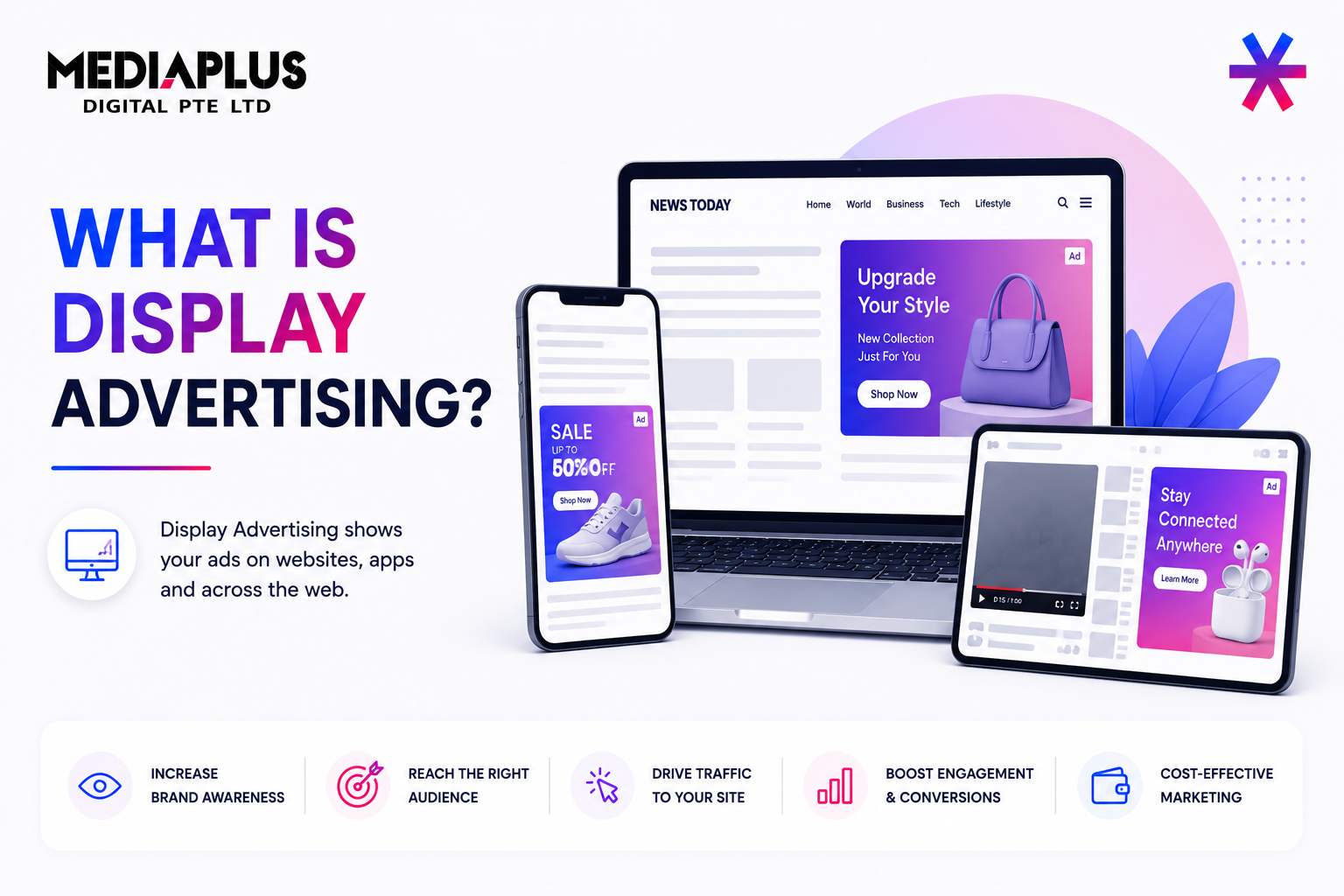
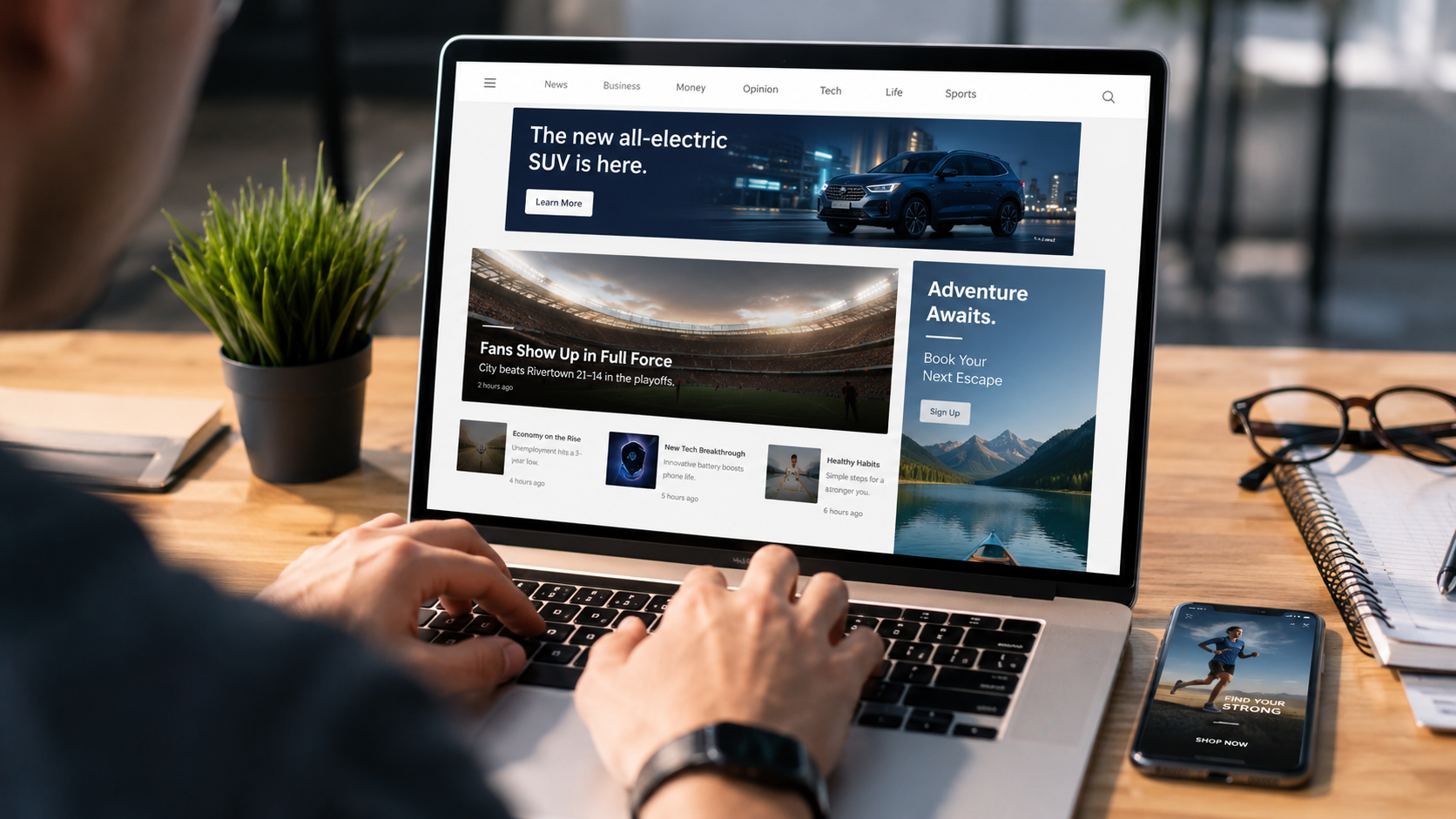
Display advertising is a form of paid digital advertising that uses visual formats, banners, images, video, and interactive rich media, placed on websites, mobile apps, and other digital properties. It is called “display” because the ad is displayed on a page a person is already viewing, rather than served in response to a search query.
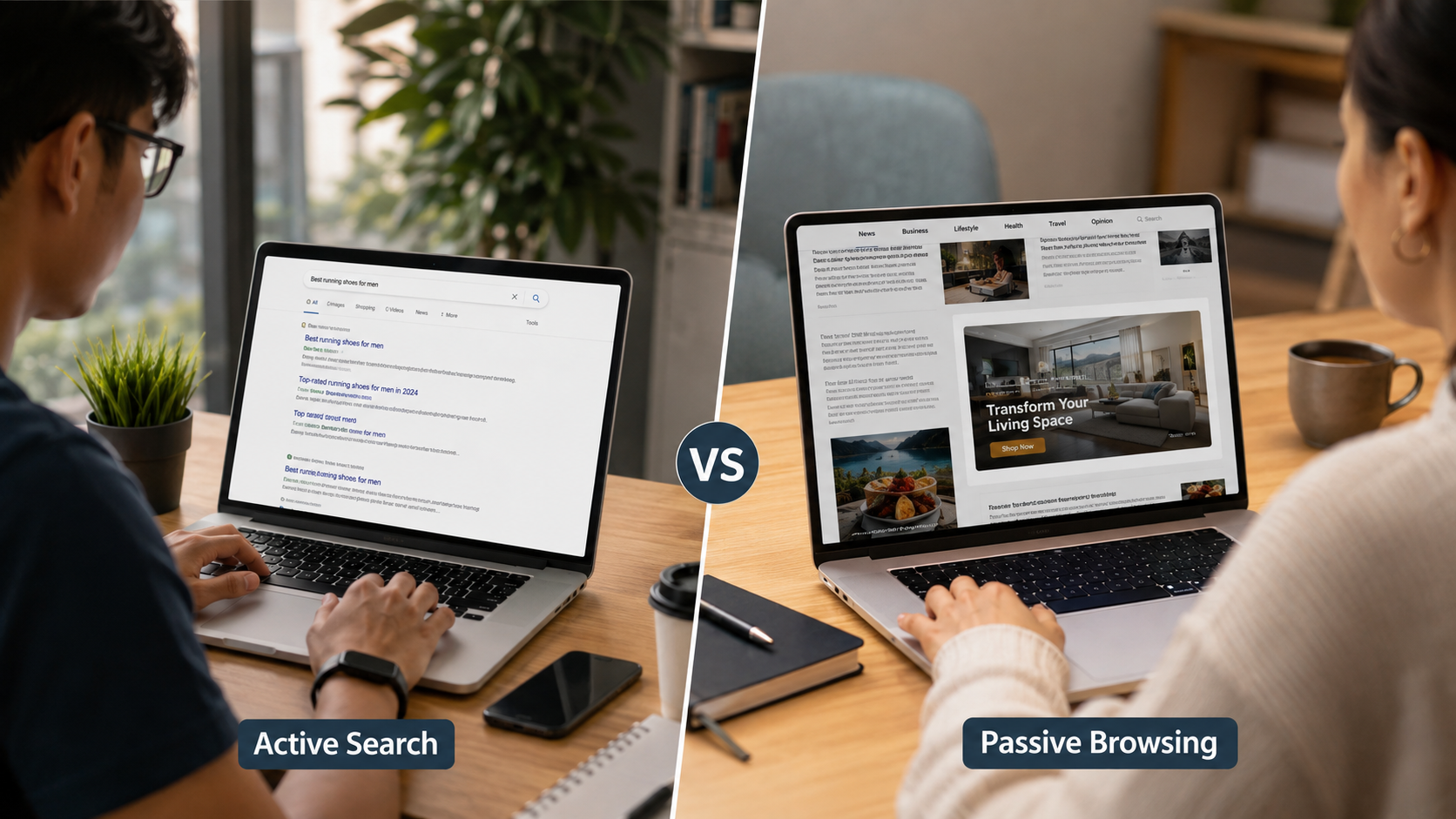
The defining trait is intent. A search ad catches someone who is actively looking for what you sell. A display ad reaches someone who is not searching yet, while they read an article, watch a video, or use an app. That makes display better for awareness, brand recall, and re-engaging past visitors than for capturing bottom-of-funnel demand on its own.
How display advertising works
Display ads are served through ad networks that connect advertisers who want space with publishers who have it. The flow, simplified:
- A publisher (a website or app) has ad space to sell.
- An advertiser sets a budget, targeting, and creative.
- An ad network or platform (most commonly the Google Display Network) matches the ad to relevant pages and audiences.
- The ad is shown to people who fit the targeting as they browse.
- You pay per impression (CPM) or per click (CPC), and measure the results.
Increasingly this buying happens programmatically, through automated, data-driven auctions rather than manual placement. More on that below.
Display ad formats
Display covers several visual formats, each suited to different goals.
|
Format |
What it is |
Good for |
|
Banner ads |
Static or animated image ads in standard sizes |
Broad awareness, reach |
|
Responsive display ads |
Ads that auto-adjust to fit any placement |
Scale and efficiency |
|
Rich media |
Interactive ads with video, animation, or expansion |
Engagement |
|
Video display ads |
Short video on display placements |
Awareness and consideration |
|
Interstitial ads |
Full-screen ads, common in apps |
High visibility (used carefully) |
|
Native display ads |
Ads styled to match the surrounding content |
Less intrusive, higher engagement |
How display targeting works
The power of display is in who sees it, not just where. The main targeting types:
- Remarketing and retargeting: show ads to people who already visited your site or app, to bring them back. This is often the highest-performing display tactic. See our retargeting and remarketing strategy.
- Audience targeting: reach people by demographics, interests, and in-market segments (for example, people researching a purchase).
- Contextual targeting: place ads on pages about a relevant topic, so a running-shoe ad appears on a fitness article.
- Placement targeting: hand-pick the specific websites, apps, or channels where your ads run.
Where display ads run: the Google Display Network
Most display advertising in Singapore runs on the Google Display Network (GDN), which reaches a vast share of the web across millions of websites, apps, YouTube, and Gmail. It lets you combine the targeting above with Google’s audience data, at almost any budget. Other networks and demand-side platforms extend reach further. Learn more in our Google Display Network guide.
Display ads vs search ads
These two are often confused, so here is the difference.
|
Display ads |
Search ads |
|
|
Where they appear |
Websites, apps, videos |
Google search results |
|
Format |
Visual (image, video) |
Text |
|
Audience intent |
Browsing, not searching yet |
Actively searching to buy |
|
Best for |
Awareness, remarketing, demand |
Capturing existing demand |
|
Typical cost per click |
Lower |
Higher |
They work best together: search captures people ready to buy, and display builds awareness and re-engages them. See search ads vs display ads and what SEM is.
Display ads vs native ads
Native ads are a subset of display designed to blend into the look and feel of the page, appearing as recommended content rather than an obvious banner. They tend to be less intrusive and can earn higher engagement, but they must be labelled as advertising. Standard display banners are more clearly ads and better for pure visibility.
Display advertising vs programmatic advertising
People treat these as opposites, but they describe different things. Display is the format and placement: visual ads on a network of sites. Programmatic is the buying method: automated, real-time bidding that uses data to place ads. Most display today is bought programmatically, but you can also buy display directly. In short, display is what the ad is; programmatic is how it is bought. See our roundup of programmatic advertising campaign examples.
Benefits of display advertising
- Massive reach across the web at low cost per impression.
- Strong for awareness and recall, keeping your brand visible.
- Remarketing brings back visitors who did not convert, cheaply.
- Precise targeting by audience, context, and placement.
- Visual storytelling that text search ads cannot do.
- Measurable, with clear data on impressions, clicks, and conversions.
Limitations to be aware of
- Lower click-through rates than search, since the audience is not actively searching.
- Banner blindness: people tune out obvious ads, so creative quality matters.
- Brand safety: without placement control, ads can appear on unsuitable sites.
- Attribution: display often assists conversions rather than closing them, so judge it on its role in the funnel, not last-click alone.
Privacy and the end of third-party cookies
Display targeting has long relied on third-party cookies, and those are being phased out as browsers and privacy rules tighten. In Singapore, the PDPA governs how you handle personal data, including data collected through tracking. The shift means first-party data (your own audiences and email lists), contextual targeting, and privacy-safe audience tools are becoming more important. Build consent and clean data collection into your campaigns now.
How much does display advertising cost?
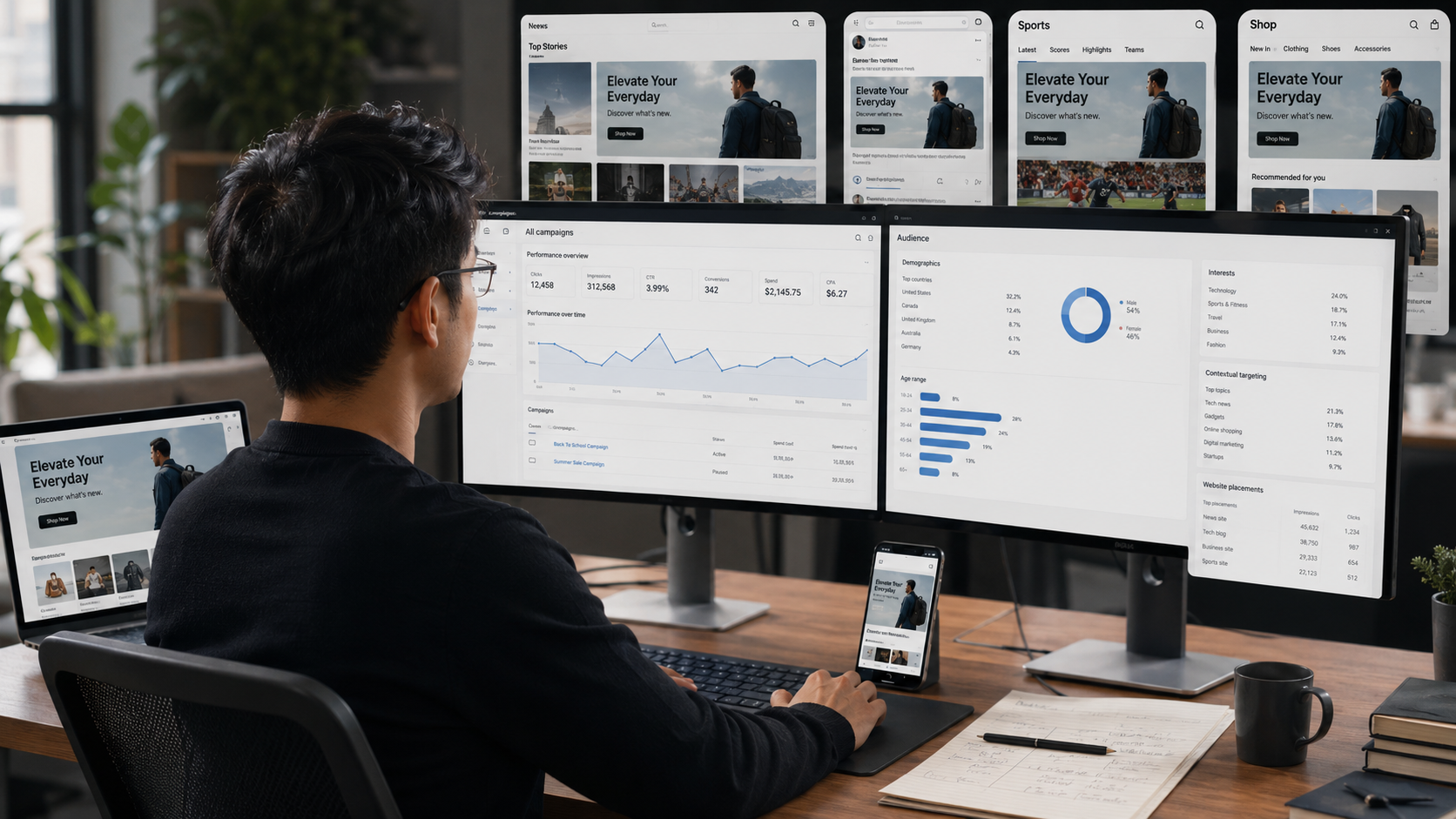
Display is usually priced by CPM (cost per thousand impressions) or CPC (cost per click), and it is generally cheaper per interaction than search because intent is lower. You can start small and scale, which makes it accessible for SMEs. Budget for creative as well as media, since good banners and video do most of the heavy lifting. See our guide to Google Ads cost.
Creative best practices
- Keep it simple: one clear message, a strong image, and an obvious call to action.
- Brand it: your logo and colours so people remember who the ad is for.
- Match the format to the goal: video and rich media for engagement, clean banners for reach.
- Provide multiple sizes so your ads fit every placement.
- Refresh creative regularly to fight banner blindness.
- Send clicks to a relevant landing page, not a generic homepage.
How display advertising performance is measured
|
Metric |
What it tells you |
|
Impressions |
How many times the ad was shown |
|
Reach and frequency |
How many people saw it, and how often |
|
Click-through rate (CTR) |
How compelling the ad is |
|
Cost per click (CPC) / CPM |
What you pay per click or per thousand views |
|
Conversions and assisted conversions |
Actions the ad drove or influenced |
|
View-through conversions |
People who saw the ad, did not click, then converted later |
Because display often influences conversions rather than closing them, look at assisted and view-through conversions, not just last-click.
Frequently asked questions
What are display ads?
Display ads are visual online adverts, banners, images, video, and rich media, shown on websites, apps, and platforms while people browse. Display advertising is the practice of buying and running them, mainly for awareness and remarketing.
What is display advertising in simple terms?
It is visual online advertising, banners, images, and video, shown on websites and apps while people browse, rather than in search results. It is used mainly for awareness and remarketing.
What is the difference between display ads and search ads?
Search ads are text ads shown to people actively searching on Google. Display ads are visual ads shown to people while they browse other sites and apps. Search captures demand; display builds and re-engages it.
Is display advertising the same as programmatic?
No. Display is the ad format and placement; programmatic is an automated way of buying ads. Most display is now bought programmatically, but they are not the same thing.
What is the Google Display Network?
Google’s network of millions of websites, apps, YouTube, and Gmail where display ads can appear, combined with Google’s audience data and targeting. It is where most display advertising runs.
Does display advertising still work with cookies going away?
Yes, but the tactics are shifting toward first-party data, contextual targeting, and privacy-safe audiences. Remarketing and contextual display remain effective when set up with proper consent.
How much does display advertising cost?
It is usually cheaper per click or impression than search. You can start with a small budget and scale, but plan for creative costs too, since strong visuals drive results.
Run display advertising that builds your brand
Display advertising keeps your brand in front of the right people and brings back visitors who were not ready to buy. If you want display campaigns that support real business outcomes, talk to MediaPlus Digital. Explore our Google Display Network, Google Ads, and performance marketing services, with PSG support for eligible SMEs.