
Quick answer
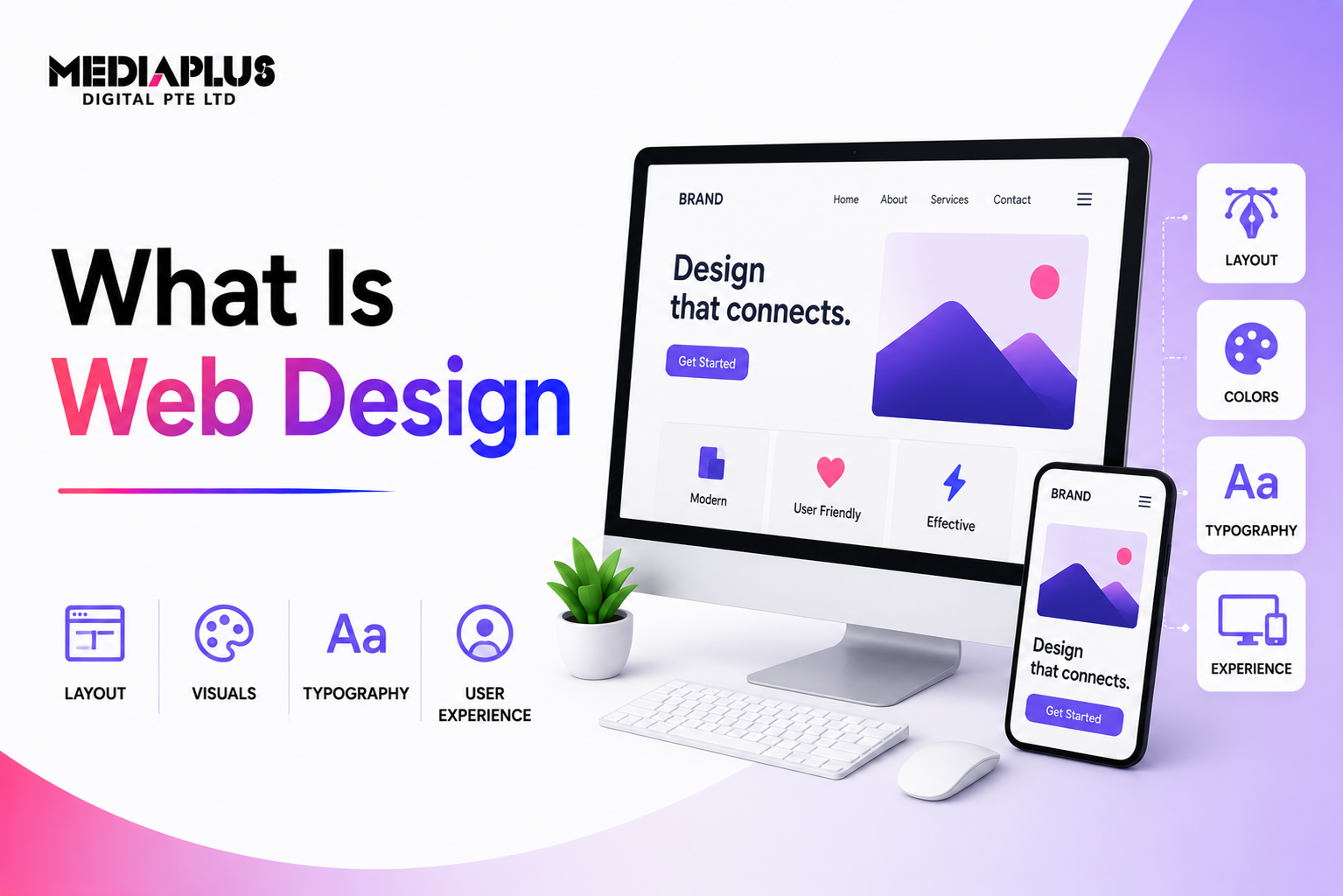
Web design is the work of deciding how a website looks, how it is laid out, and how a visitor moves through it. It covers the visual side (layout, typography, colour, imagery) and the structural side (navigation, page hierarchy, what appears where on a phone versus a laptop).
It stops at the point where the design has to be built. Turning a design into a working site is web development.
One line: web design decides what the site should be; web development makes it exist.
Web design vs web development
These two get used interchangeably in briefs and quotations, which is how projects end up costing more than expected. They are different jobs, often done by different people.
|
Web design |
Web development |
|
|
Question it answers |
What should this look like, and how should someone move through it? |
How do we build it so it works? |
|
Output |
Wireframes, mockups, a design system, prototypes |
Working pages, templates, integrations, a CMS |
|
Tools |
Figma, Adobe XD |
HTML, CSS, JavaScript, WordPress, Shopify |
|
Fails when |
The design looks good but nobody can find the enquiry form |
The site works but takes eight seconds to load |
|
Who usually owns it |
Designer, UX designer |
Front-end developer, back-end developer |
A useful test when reading a quotation: if it lists only one of the two, ask which one you are paying for. Our longer comparison is at web development vs web design, and the development side is covered in what is web development.
What web design is actually made of
Six parts. A site can fail on any one of them.
Layout and hierarchy
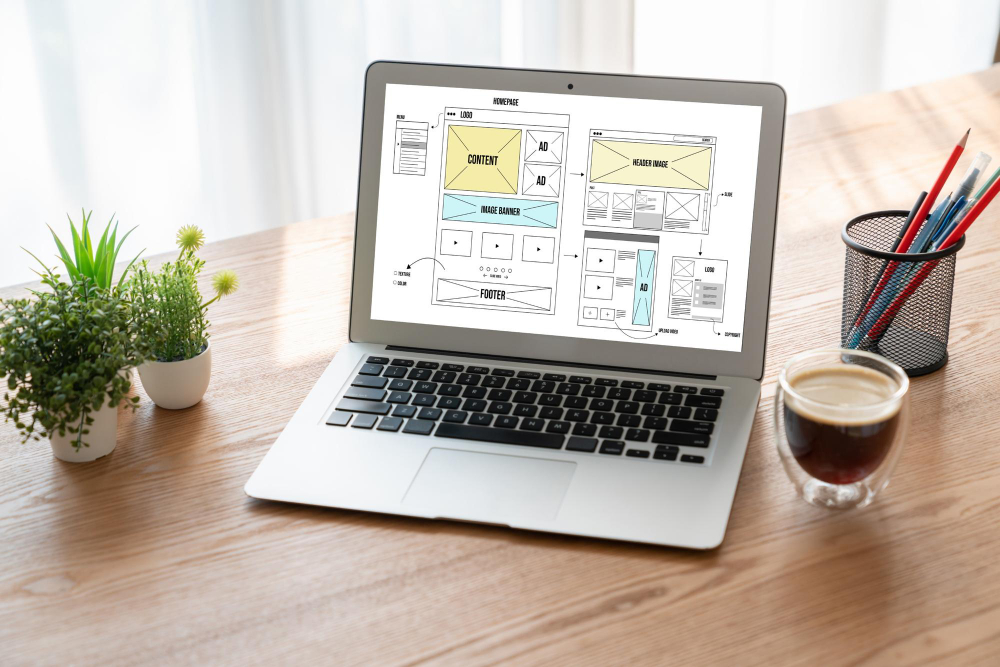
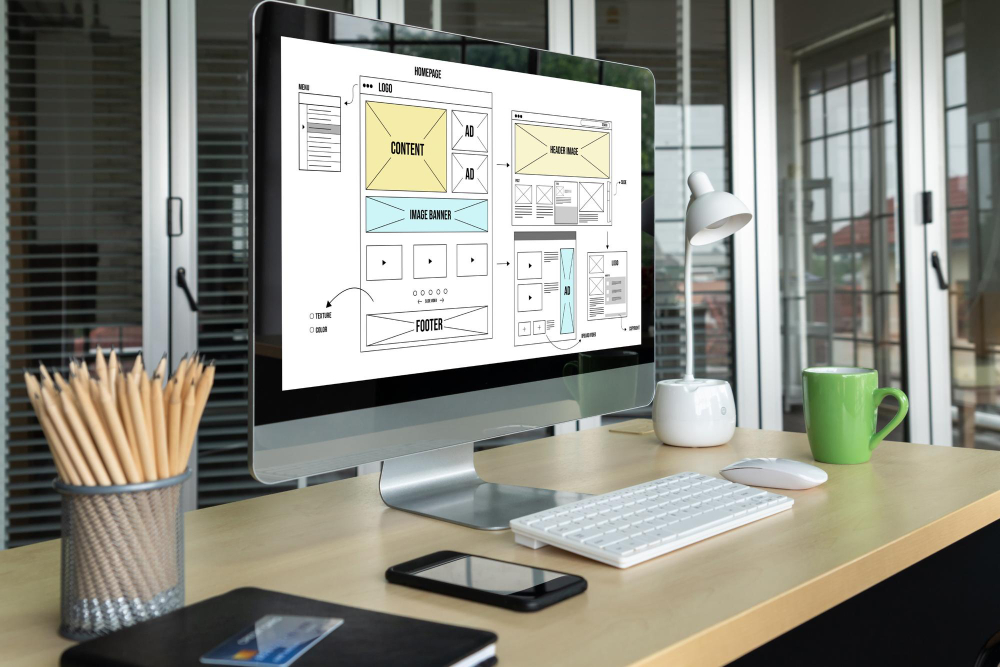
Where things sit, and what the eye reaches first. Good hierarchy means a visitor understands what the page is about within a few seconds without reading every word. This usually starts as a wireframe before any visual design happens.
Navigation
How someone gets from where they landed to what they came for. Most visitors do not arrive on the homepage, so every page has to answer “where am I and where do I go next”. Mapping this properly is the user flow part of the job.
Typography
Font choice, size, line length and spacing. This is the single most underrated part of web design, because it determines whether people read the page or skim and leave. Body text below 16px on mobile is a common and expensive mistake.
Colour and contrast
Brand colours matter, but contrast matters more. Text that fails contrast ratios is harder to read for everyone and inaccessible for some. Contrast is also what makes a call to action look like a call to action.
Responsive behaviour
How the layout rearranges across screen sizes. Not “does it shrink” but “does it still make sense”. A three-column comparison table that becomes an unreadable horizontal scroll on a phone is responsive in name only.
Speed and accessibility
Design decisions create most performance problems. Oversized hero images, five font weights, heavy sliders. These are design choices with technical consequences, and they show up in Core Web Vitals and in bounce rates.
What separates good web design from bad
Good web design is not the same as attractive web design. The test is whether the site does the job it was built for.
Three questions that usually reveal the answer:
Can a first-time visitor say what you do within five seconds? If your homepage hero says “Solutions that move you forward”, the answer is no.
Is the next step obvious on every page? Not just the homepage. Every page needs a way forward, and it should be the same visual element every time.
Does it work for the person on a phone on the MRT? In Singapore, most first visits are mobile. A design approved on a 27-inch monitor and never checked on a phone is a design that was never really finished.
Common failures are collected in website design mistakes to avoid.
How a web design project runs
|
Stage |
What happens |
Typical length |
|
Discovery |
Who the site is for, what it must achieve, what exists today |
1 to 2 weeks |
|
Structure |
Sitemap, page list, user flows, wireframes |
1 to 2 weeks |
|
Visual design |
Design system, key page designs, mobile versions |
2 to 3 weeks |
|
Build |
Development, CMS setup, content loading |
3 to 6 weeks |
|
Testing and launch |
Browsers, devices, forms, tracking, redirects |
1 to 2 weeks |
The stage people try to skip is structure, because it produces grey boxes rather than something pretty to show the boss. Skipping it is why revisions pile up during visual design, when changes are far more expensive to make.
On a rebuild, one task matters more than the design: redirect mapping. Every old URL needs to point at its closest match on the new site. Skipping it is the most common reason a new site launches with less traffic than the one it replaced. More on that in website redesign.
What web design costs in Singapore
Prices vary enormously because “a website” describes anything from a five-page brochure to a store with inventory integration.
Rough bands for the Singapore market:
- A small brochure site on a template: low four figures
- A custom corporate site with a CMS and 10 to 20 pages: mid four to low five figures
- An e-commerce build with payments and inventory: five figures and up
What moves the number: how many unique page templates are needed, whether content is written for you, whether anything integrates with another system, and how much post-launch support is included.
Before comparing two quotations, ask where the cheaper one saves money. Usually it is one of three places: a template configured without regard to your content, no redirect mapping on a rebuild, or hosting registered in the agency’s name instead of yours. The full breakdown is at web design cost in Singapore.
If you are weighing an agency against doing it yourself, website builders compared covers that decision.
Signs your site needs a redesign rather than a refresh
- It is not usable on a phone without pinching and zooming
- Editing a page requires a developer
- Pages take more than three seconds to load
- The structure no longer matches what you sell
- Enquiries have fallen while traffic has stayed flat
- It was built on a platform that no longer receives security updates
One or two of these is a fix. Four or more is a rebuild.
Frequently asked questions
What is web design in simple terms?
Deciding how a website looks and how people move through it. The visual layer plus the structure, before anyone writes code.
What is the difference between web design and web development?
Design decides what the site should be. Development builds it. Design produces wireframes and mockups; development produces working pages.
Is web design the same as UI or UX design?
They overlap. UX design is about how something works and feels to use. UI design is about the interface elements themselves. Web design in practice usually includes both, applied to a website specifically.
Do I need to know how to code to design websites?
No, but understanding what is easy and what is expensive to build makes a designer considerably more useful.
How long does a website take?
Eight to twelve weeks is typical for a custom corporate site. Faster is possible on a template. The variable that delays most projects is content, not design.
What makes a website design good?
It tells a first-time visitor what you do, makes the next step obvious on every page, and works properly on a phone. Everything else is secondary.
Can I redesign without losing search rankings?
Yes, with redirect mapping and by keeping the content that already ranks. Rankings are lost when old URLs are dropped without redirects.
How much does web design cost in Singapore?
From low four figures for a small template site to five figures for a custom e-commerce build. Scope, not design hours, drives the difference.
Getting it built
MediaPlus Digital has been designing and building websites in Singapore since 2010, with 60 digital professionals in-house and more than 1,800 projects delivered.
If you are past the research stage and want a scope and a quotation, see web design services Singapore. Recent work is in the portfolio.




